Requests

Effectively removing aphids when washing salad leaves with AphidWash

A processing aid for a high-performance washing process: AphidWash makes it easier to mechanically remove aphids and sticky contaminants from salad leaves and leafy vegetables.
Effectively removing aphids when washing salad leaves with AphidWash

More reliable cleaning of salad leaves, salad mixes, and leafy vegetables in the case of aphid outbreaks

More reliable cleaning of salad leaves, salad mixes, and leafy vegetables in the case of aphid outbreaks

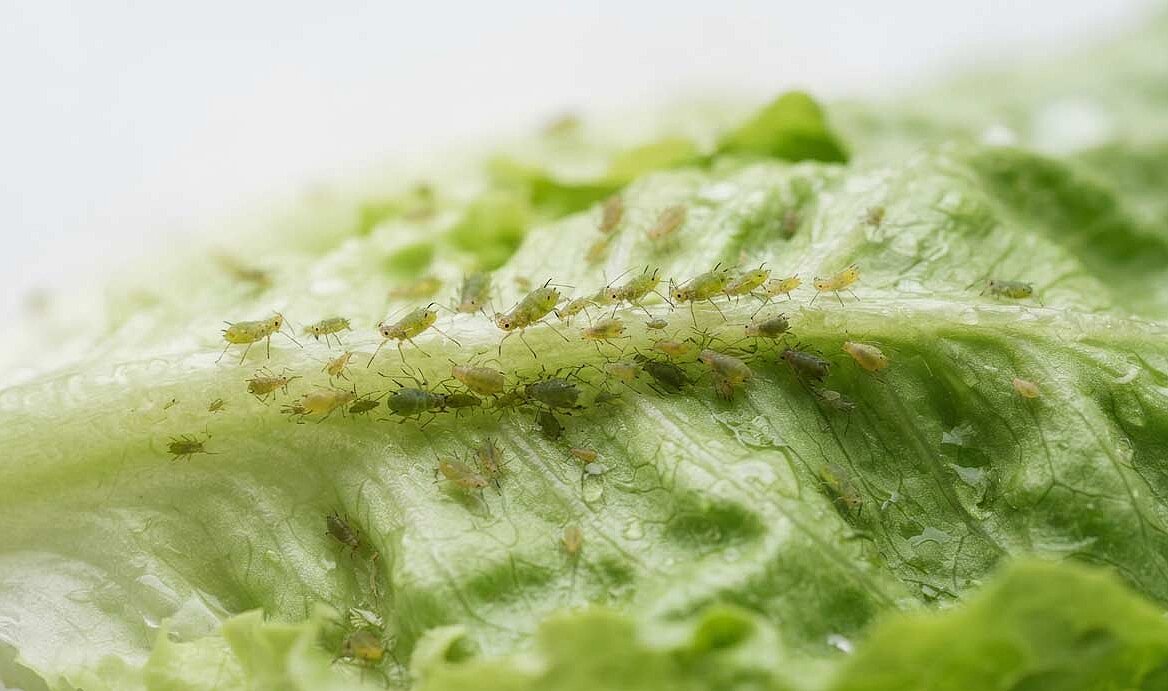
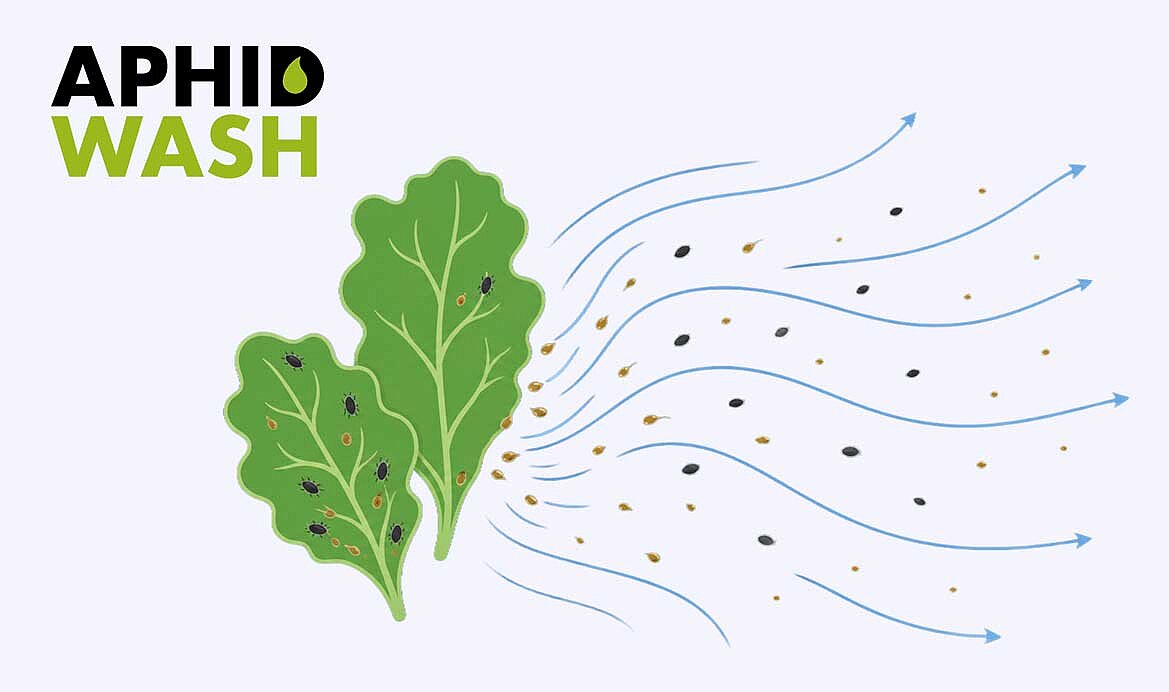
Aphids pose a significant challenge to processors of salad leaves and leafy vegetables. They can be found deep inside heads of lettuce, along leaf veins, or in leaf axils that are hard to reach. At the same time, their water-repellent surface makes them difficult to wet with wash water. As a result, they can remain adhered to the plant tissue or float on the wash water despite intense water movement.

AphidWash was specially developed to improve the washing performance for salad leaves, salad mixes, and leafy vegetables. The innovative processing aid based on non-ionic surfactants reduces the surface tension of the water and therefore makes it easier to physically remove aphids during the washing process.

After removal, the aphids are transported away from the product with the wash water flow and filtered out of the process water by a suitable filtration system. A final rinsing stage using clean drinking water then completes the washing process.

AphidWash is neither a pesticide, insecticide, nor disinfectant. The product does not kill any insects and has no antimicrobial function. It solely supports the mechanical removal of insects during processing.


The benefits of AphidWash for fresh-cut and salad producers

Proven improvement of the washing performance

Proven improvement of the washing performance

AphidWash significantly reduces the aphid population. The following results* can be achieved:  

  • Reduction of aphids by 85 to 90 %
  • with a washing time of 30 to 60 seconds
  • and a process temperature of 7 °C
  • in combination with water filtration and subsequent rinsing.

KRONEN supports processors in designing and testing a washing process to suit their application. Do you need advice? Feel free to contact us!

*The figures represent results obtained under specific conditions. The removal result depends on a multitude of factors, including the type of salad leaf, intensity and position of the contamination, dosage, treatment duration, water temperature and quality, mechanical washing intensity, filter technology, system layout, and product flow.


Removing aphids even from leaf surfaces that are difficult to wet

Removing aphids even from leaf surfaces that are difficult to wet

The surface of aphids is protected by a wax-like, water-repellent layer. When washing products with water, this may cause a thin layer of air to remain on the body. The water therefore fails to fully reach the surface of the aphid and can only reach in between the leaf and the aphid to a limited extent. This physical effect makes aphids difficult to remove, even with strong turbulence.

AphidWash changes the wetting properties of the wash water. As a result:

  • The surface tension is reduced.
  • The layer of air around the aphid is ruptured.
  • The water can reach in between the leaf and the aphid more successfully.
  • The adhesion of the aphids to the leaf surface weakens.
  • The removed aphids can be transported away from the product with the wash water flow.

The mechanism of action is therefore solely physical. AphidWash plays no role whatsoever in the final product after washing and rinsing.


Fewer complaints and manual sorting requirements

Fewer complaints and manual sorting requirements

A visible aphid outbreak can have severe consequences for food processors, for example complaints from consumers and retailers, increased manual monitoring and sorting requirements, and, in the worst-case scenario, batches being rejected.

By improving the physical removal of such outbreaks, AphidWash helps processors to:

  • achieve more consistent product quality
  • reduce the complexity of manual checks after processing
  • make the processing of contaminated raw produce more reliable
  • reduce the risk of visible aphids in the packaged final product
  • efficiently advance the existing washing process

The actual result depends on factors such as the product, the severity of the outbreak, the washing time, the water movement, the dosage, and the filtration system used.


A better way to rinse off sticky contaminants

A better way to rinse off sticky contaminants

In addition to aphids, leaf surfaces can also contain sticky deposits, such as honeydew and associated surface contaminants.

The non-ionic surfactant system of AphidWash supports the wetting and distribution of these deposits in the wash water. As a result, it is easier to remove them from the product surface during the mechanical washing and rinsing process.

The application focuses on:

  • fresh-cut lettuce and loose lettuce leaves, e.g. iceberg lettuce, romaine lettuce, and lollo rosso
  • baby leaf products
  • salad mixes
  • leafy vegetables
  • products with leaf veins and leaf axils that are hard to reach

An effective combination of treatment and filtration

An effective combination of treatment and filtration

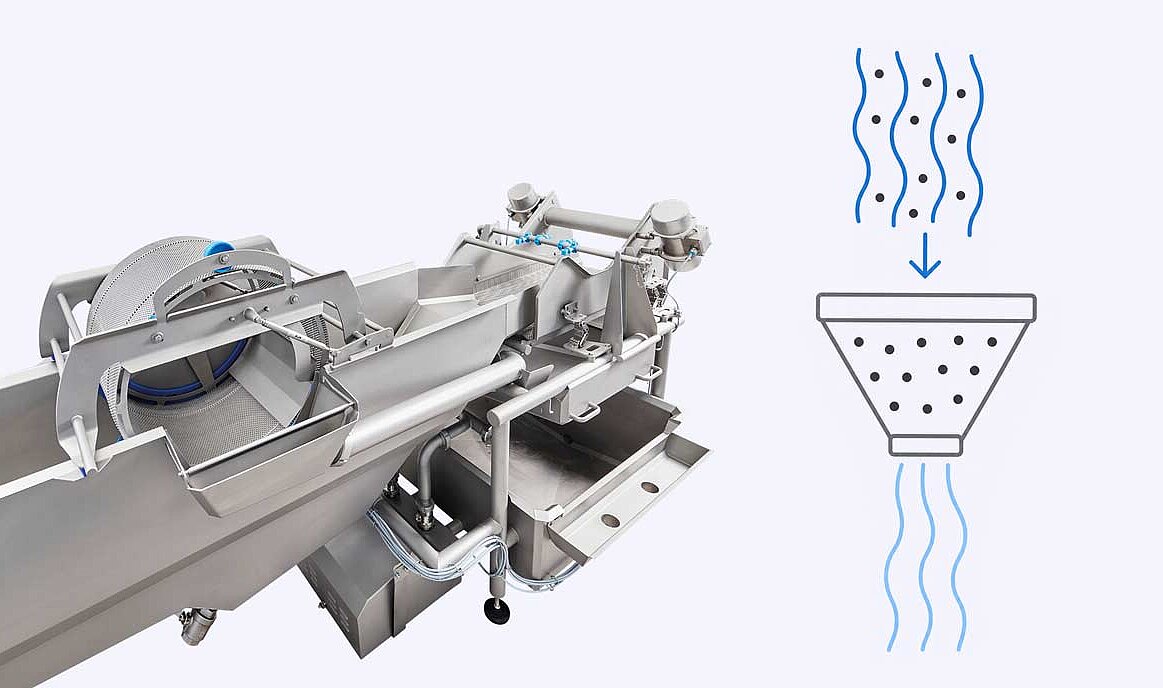
A reliable process solution not only needs to remove aphids from plant tissue; it is also required to then transport the removed aphids out of the wash water as rapidly and continuously as possible.

If the aphids remain in the water circulation, they may come into contact with the product again or adhere to other leaves. AphidWash therefore achieves the best results when combined with a high-performance water circuit and filtration system.

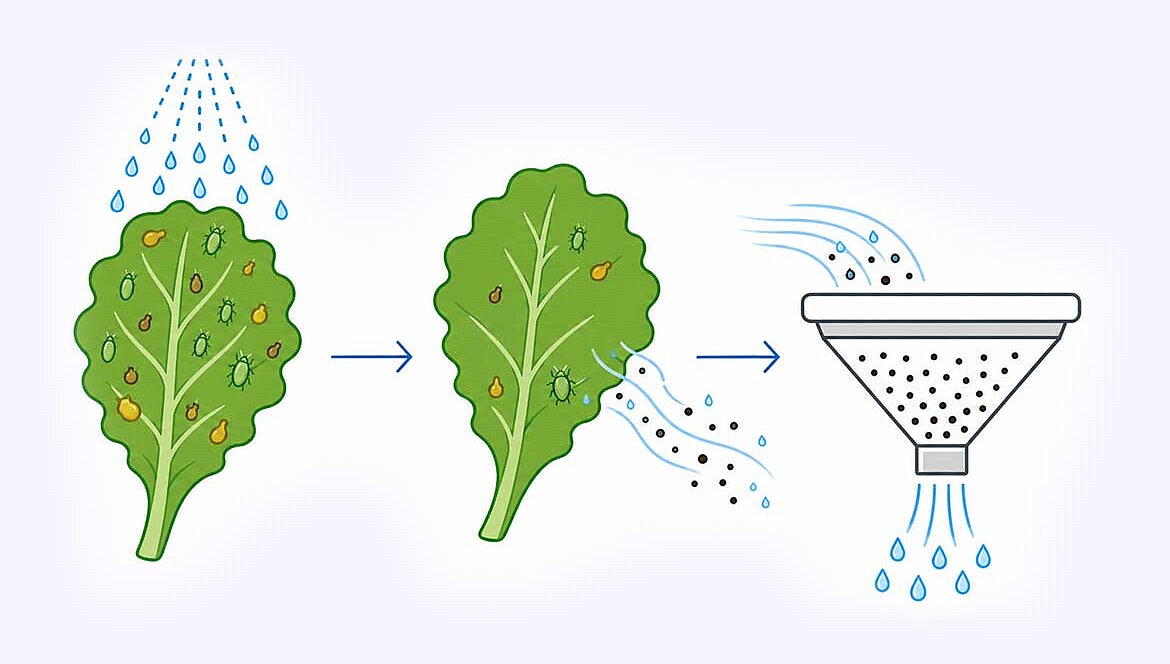
The recommended process principle is as follows:

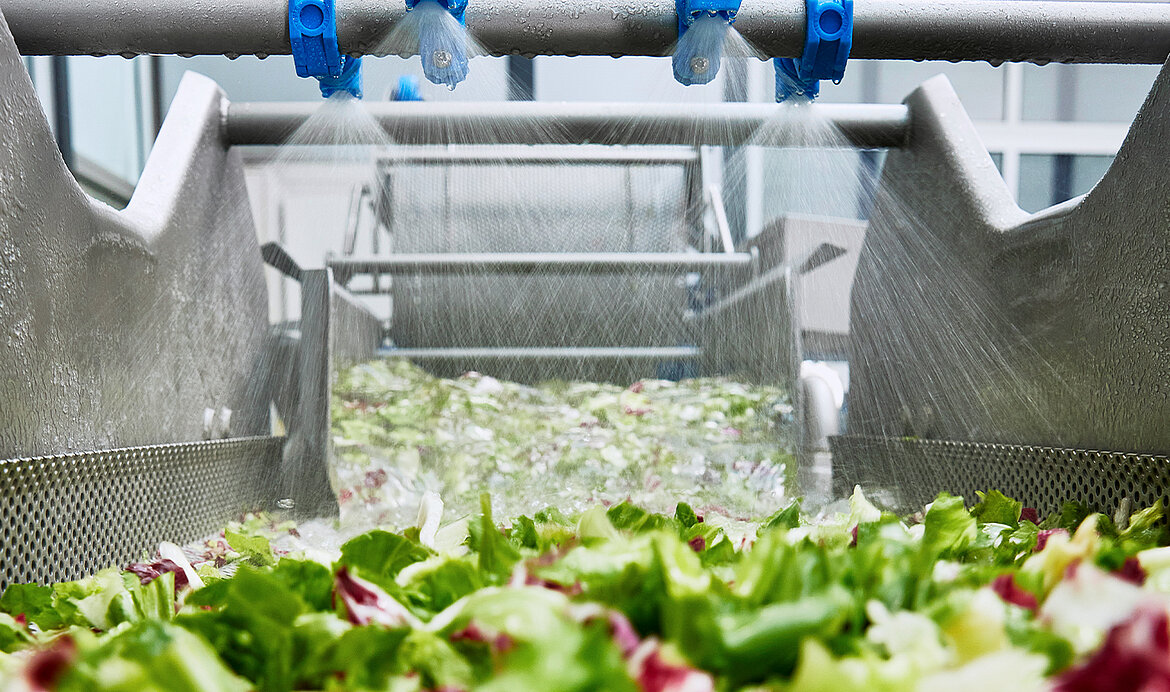
Wetting and removal → transportation away from the product with the wash water flow → filtration out of the process water → rinsing of the product with clean water

The combination of surface wetting, controlled removal, and filtration is essential for high removal rates under industrial conditions.

Do you have any questions? Feel free to contact us directly! 


Flexible use in industrial washing machines

Flexible use in industrial washing machines

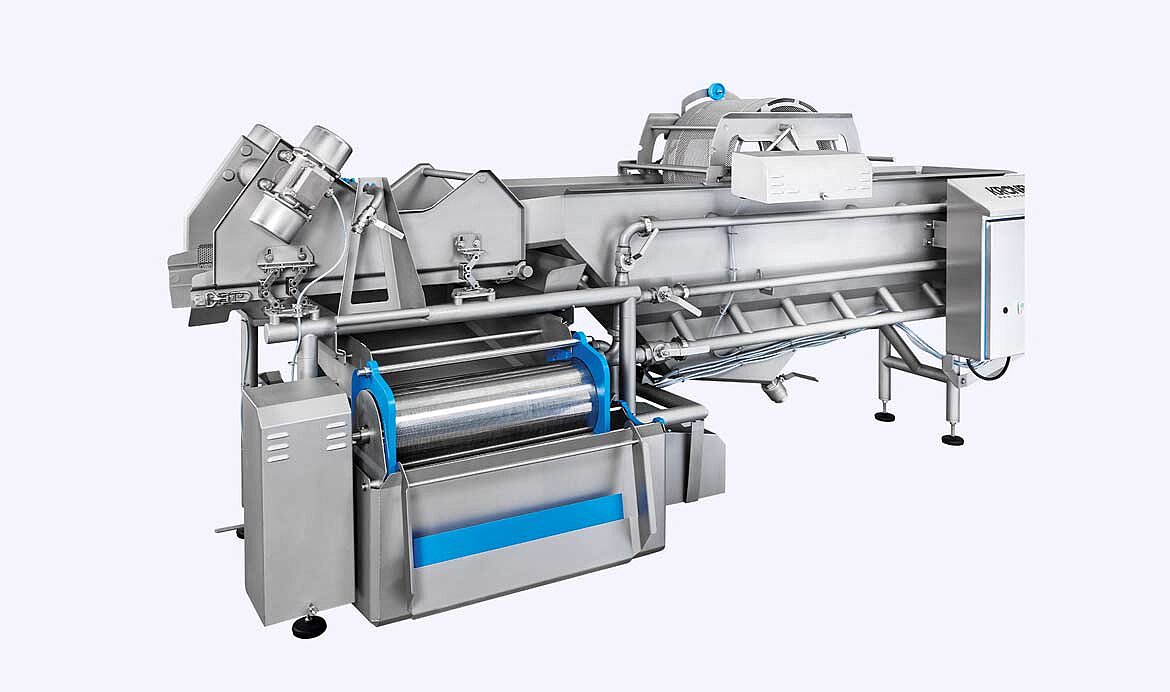
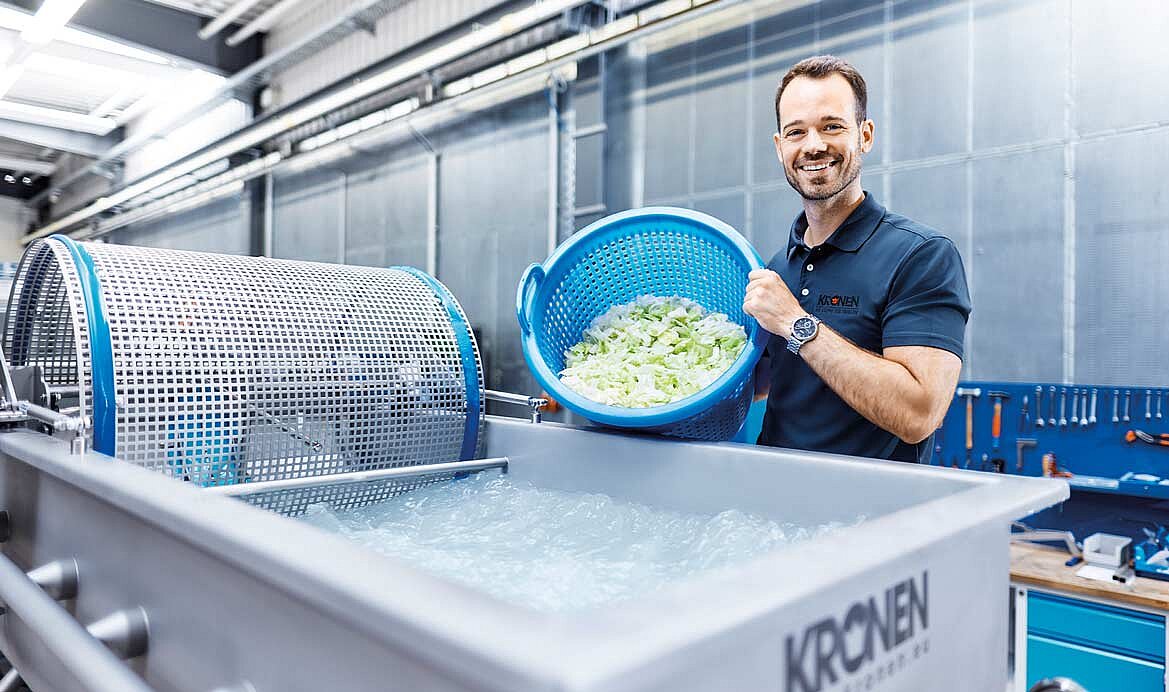
AphidWash can be used in the wash tank of a suitable washing system, for example the KRONEN washing machines. For an effective process configuration, we recommend the following components and process steps in particular:

  • Even distribution of the diluted AphidWash solution
  • Gentle but sufficient water movement
  • Dwell time adjusted to suit the product
  • Suitable filters to transport removed aphids away from the product
  • Continuous monitoring of the process water
  • Final rinsing stage with clean drinking water

The concrete machine set-up and filtration should be chosen based on the product, the throughput, and the existing processing line. The KRONEN filter system is also a suitable option for halal and kosher production.


A simple three-stage washing process

1. How to prepare the AphidWash solution

AphidWash should be diluted with warm, clean water before or while being used in the wash tank.

Recommended dosage:
0.2 to max. 0.5 ml AphidWash per liter of water

The dosage should be chosen to suit the product, the severity of the outbreak, the process, and the respective production system. Please observe the applicable safety and application information.

2. Washing salad leaves with AphidWash and filtering out aphids

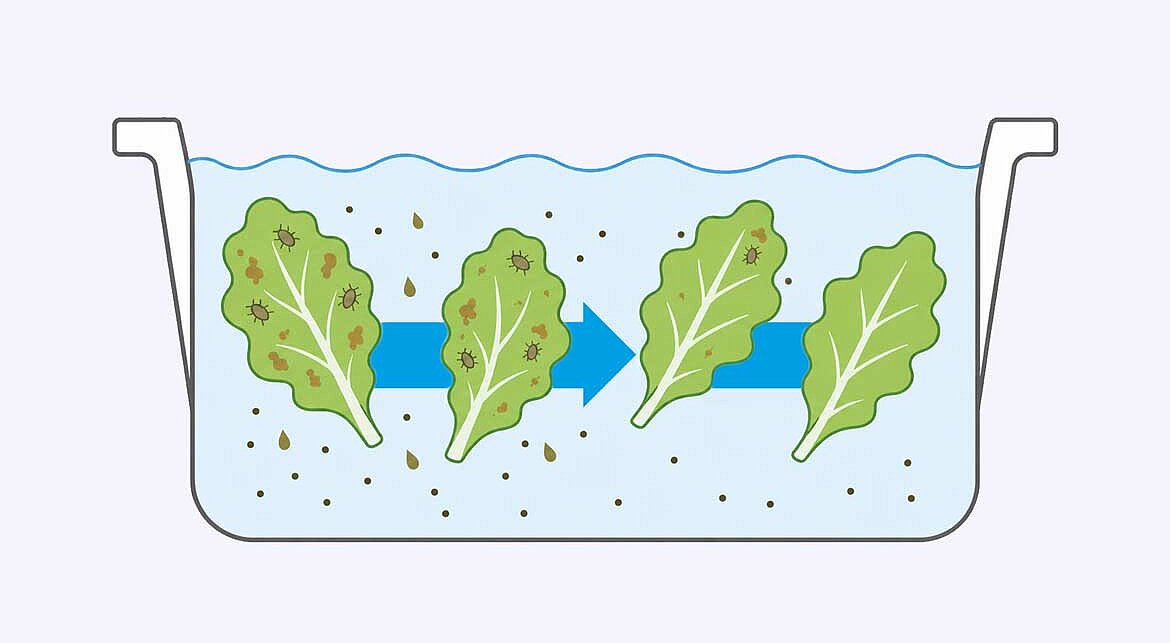
Salad leaves, salad mixes, or leafy vegetables are treated in the washing system. During the application, AphidWash improves the wetting and makes it easier to remove the aphids mechanically.

Recommended application time:
30 to 180 seconds

The removed aphids are discharged with the wash water flow and extracted from the wash water using a suitable filtration system.

3. Rinsing with clean drinking water

After the treatment, rinse the product with clean drinking water. The post-rinsing step removes the washing solution and any released deposits that may remain on the salad leaves before they are further processed, mixed, or packaged.

After rinsing, AphidWash plays no technological role in the final product.

The advantages of AphidWash for salad and fresh-cut producers at a glance

The advantages of AphidWash for salad and fresh-cut producers at a glance

  • Supports the effective physical removal of aphids from salad leaves, salad mixes, baby leaf greens, and leafy vegetables

  • Helps rinse off honeydew and sticky deposits

  • Simple three-stage treatment process

  • Produced from food-safe non-animal ingredients – suitable for vegan and vegetarian product

  • Odorless and tasteless

  • No pesticide, insecticide, or disinfectant function

  • For professional use in food processing facilities

AphidWash as a processing aid - Natural Aphid Removal by KRONEN

AphidWash as a processing aid - Natural Aphid Removal by KRONEN

AphidWash is designed to used as a processing aid** when washing salad leaves and leafy vegetables. The product is used during the production process to support the mechanical removal of aphids. After being used for its designed purpose and rinsed off with drinking water, it plays no technological role in the final product.

AphidWash is made from food-safe, non-animal ingredients and is suitable for vegan and vegetarian products. It complies with the relevant standards according to Regulation (EC) No. 178/2002, Regulation (EC) No. 852/2004, and Regulation (EC) No. 1333/2008. 

AphidWash is expressly not intended to:

  • kill insects
  • tackle pest infestations in fields
  • conserve products
  • disinfect products
  • provide antimicrobial treatment
  • dye products
  • change the flavor or scent of products

** The term “processing aids” generally applies to substances that are technically required in food processing but that develop no technological effect on the final product and are only permitted to leave behind technically unavoidable residue that poses no health risk and does not impair the finished product. 

AphidWash FAQs

AphidWash is a processing aid based on non-ionic surfactants. It is designed for professional use when washing salad leaves and leafy vegetables. AphidWash makes it easier to mechanically remove aphids from the lead surface.

More about AphidWash as a processing aid

The non-ionic surfactant system reduces the surface tension of the wash water. This allows the water to better wet the water-repellent surface of the aphid and to reach in between the leaf and the aphid. Here, it weakens the adhesion of the aphid to the leaf, thus enabling the aphid to be removed by the water movement.

More about how AphidWash works

No. AphidWash is not an insecticide or pesticide and it does not kill off aphids. It changes the wetting in the washing process to make it easier to physically release and remove aphids. AphidWash does not claim to have an antimicrobial or disinfectant effect.

AphidWash is particularly suitable for salad leaves, baby-leaf products, salad mixes, and other leafy vegetables from which aphids need to be removed during industrial or commercial processing.

The recommended dosage is 0.2 to max. 0.5 ml per liter of water. The product should be diluted with warm, clean water in the wash tank.

More about the simple three-stage washing process

The recommended application time is between 30 and 180 seconds. The optimal duration depends on the product, the infestation, and the washing system used.

More about the simple three-stage washing process

The filtration extracts the aphids removed during the washing process from the process water. By doing so, it prevents them from remaining in the water circulation or coming into contact with the product again. The combination of treatment and filtration is therefore particularly important for a reliable process.

More about the combination of treatment and filtration

Yes. After the application, the product should be rinsed with clean drinking water to complete the treatment. The product can then be further processed or packaged.

More about the simple three-stage washing process

No. After being rinsing off accordingly, AphidWash plays no role in the final product. Any technically unavoidable residue has no functional effect.

More about AphidWash as a processing aid

AphidWash is made from from food-safe ingredients and is tasteless and odorless. When using AphidWash, it is essential that you follow the recommended dosage and rinsing instructions.

AphidWash has no pesticide, insecticide, or disinfectant function.

More about AphidWash as a processing aid

AphidWash can generally be used in suitable washing processes with a wash tank, sufficient water movement, filtration, and subsequent rinsing with fresh water. To determine whether an existing line is suitable, please check the concrete machine, water circuit, filtration, and production output.

More about using AphidWash in KRONEN washing machines

Do you want to remove aphids more reliably in your salad washing process?

KRONEN is happy to advise you on choosing a suitable washing system, the ideal filtration solution, and the integration of AphidWash into your production process. Together, we will consider:

  • the types of salad leaves and leafy vegetables that you process
  • typical degrees of infestation and contamination
  • your desired throughput
  • the water circuit and filtration
  • the required post-rinsing process
     

Request advice or an offer now